For both parents and students, selecting the best school board is a crucial choice. The two most prevalent options in India are State Boards and CBSE, and selecting a renowned school in Nagpur that complies with both systems is frequently the first step in finding the appropriate fit. Every board has its own structure, methods, and areas of expertise. You can select what best suits your learning needs by being aware of the differences. You will find it easier understand the key components of both systems after reading this comprehensive comparison of school boards.
1. What Are the Goals of Every Board?
In order to help students develop solid concepts and get ready for national exams, CBSE focuses on standardising education throughout India. State Boards focus on local language and culture as well as local requirements.
- CBSE Focus: Concept clarity, competitive exam preparation, and national-level consistency.
- State Board Focus: Flexible learning based on state interests, local expertise, and regional relevance.
- Student Outcome: State Boards assist students in maintaining ties to their local communities, while CBSE promotes greater job mobility.
2. How Are Subjects Formulated and Arranged?
Students can more easily understand concepts step-by-step and without misunderstanding thanks to CBSE’s logical and simple topic structure. The structure may not always be as uniform or well-organised because state boards vary from one state to the next.
- CBSE follows a structured and organised approach for better understanding
- State Board design varies across different states and education systems
- CBSE keeps uniformity across classes and subjects
- State Boards may have a simpler and less detailed topic arrangement
A well-structured syllabus followed in a School in Nagpur can make learning more organised and easier for students to understand step by step.
3. Learning Approach in Classrooms
- Understanding and concept-based learning are encouraged by CBSE. Instructors promote critical thinking, inquiry, and knowledge application.
- State Boards might put a higher priority on finishing the course material. In some cases, there is a stronger focus on memorising answers.
This difference is important in a school board comparison, especially for students who prefer practical understanding over rote learning. A Top schools in Nagpur often encourages students to think beyond textbook answers and develop a clearer understanding of concepts through practical learning methods.
4. Type of Questions Asked in Exams
The majority of the questions on CBSE exams are application-based, requiring students to comprehend and apply concepts in various contexts. State Board exams usually include simple questions from textbooks that mostly focus on memorisation and recall of previously covered topics.
- CBSE Pattern: Questions that check basic understanding of concepts and implementation.
- State Board Pattern: Questions that are primarily drawn from the syllabus and are direct and theoretical
- Student Approach: State Boards may depend more on memorisation abilities, whereas CBSE demands a high level of conceptual clarity.
In CBSE vs State board, the exam pattern creates a noticeable difference in how students learn in a Top school in Nagpur.
5. Harmony Between Theory and Real-World Work
CBSE helps students grasp concepts through exercises and experiments, placing equal importance on theory and practical learning. State Boards also incorporate practical work, however theory is frequently prioritised over experiential learning.
- Regular practical sessions, lab work, and activity-based learning are all part of CBSE.
- State Boards may give limited importance to practical work depending on the school
- CBSE encourages learning through experiments, projects, and real-life examples
- State Boards often focus more on written theory, textbook study, and final exams
6. Role of Local Context in Studies
Local topics such as regional history, language, and geography are more commonly included in State Boards, helping students stay connected with their immediate surroundings. CBSE, on the other hand, follows a national framework with less focus on regional content. This becomes an important consideration in a School in Katol Road, where students experience both structured learning and awareness of their local environment.
7. Study Load and Pace of Learning
CBSE maintains a moderate study load with a steady pace. The syllabus is designed to avoid too much pressure on students. State Boards may have a lighter or heavier syllabus depending on the state. The pace can also vary. Students frequently feel CBSE to be more balanced in terms of workload when comparing it to State Board.
8. Access to Schools Across India
For families that move on a regular basis CBSE schools are a practical option because they are easily accessible throughout the nation and even in some other countries, and a CBSE school in Nagpur also follows the same consistent curriculum structure. Transferring to a different area can be a little difficult because State Board schools are primarily restricted to their individual states. This element becomes essential for families looking for continuity and flexibility in their education when discussing State board vs CBSE syllabus.
9. Support for Goals in Higher Education
Students can more easily prepare in addition to their coursework because CBSE and national admission tests are closely associated. Because State Boards do not always employ the same exam style, students could need extra preparation and help.
Exam Alignment: The CBSE curriculum aligns well with entrance tests at the national level.
Easy Preparation: CBSE students can study for competitive exams in addition to their coursework.
Extra Effort: State Board students may need additional preparation outside school
Career Readiness: CBSE offers better support for students aiming for national-level careers
10. Teaching Methods Followed in Schools
CBSE schools often use modern teaching methods such as digital tools, activities, and discussions. State Board schools may use traditional teaching methods, depending on the institution. In CBSE vs State board, teaching style can influence how well students understand subjects.
11. Comfort and Adaptability of Students
For students who prefer a structured curriculum and simple language, CBSE can often be simpler. People used to regional languages and local teaching methods can feel more at ease on State Boards.
- CBSE suits students who prefer a clear and organised learning pattern
- State Boards are better for students comfortable with regional language learning
- CBSE offers a uniform experience across different schools
- State Boards provide familiarity with local teaching methods and environment
12. Changes and Updates in Curriculum
Curriculum Updates and Modifications
- CBSE frequently modifies its curriculum to reflect contemporary developments in education. This guarantees that students learn current and relevant subjects.
- Although the frequency of updates varies, State Boards also update their curricula.
When comparing school boards, CBSE is frequently thought to be more modern, and this approach can also be seen in a School in Katol Road.
13. Skill Development Focus
CBSE includes activities that help build skills like problem-solving, communication, and critical thinking. State Boards are improving in this area, but some still focus more on textbook learning. This makes a difference in CBSE vs State board, especially for overall development.
14. Preparation Style Required for Each Board
CBSE requires understanding and regular practice, with students focusing on concepts and application in a structured way. State Boards may require more revision and memorisation, depending on the exam pattern. In a State board vs CBSE syllabus comparison, preparation style is clearly different, and this approach is also followed in a CBSE school in Nagpur where concept-based learning is encouraged.
15. Choosing the Right Board Based on Needs
There is no single correct answer to which is better CBSE or State board. The right choice depends on your goals, learning style, and future plans. If you want national-level exposure and structured learning, CBSE may suit you. If you prefer regional focus and language comfort, State Board can be a good option.
16. Role of Government Policies in Curriculum Design
CBSE is shaped by central policies that aim to keep education consistent and standardised across the country. State Boards are influenced by state-level decisions, which allows more flexibility and changes based on regional priorities and needs.
- CBSE follows a centralised decision-making system for curriculum planning and updates
- State Boards have the freedom to modify content based on state-specific educational needs
- Policy changes in CBSE are implemented uniformly across all affiliated schools in India
- State Boards can introduce region-specific subjects, topics, and updates more easily
17. The Price and Availability of Education
CBSE schools are often private institutions with potentially greater tuition because of their superior facilities, infrastructure, and resources. While State Board schools, especially government institutions, are usually more affordable, many families find them to be a good option. Since cost directly affects accessibility and long-term educational planning, it becomes an important factor when school board comparison, including choices made for a School in Katol Road.
18. Usability of Digital Learning Support
To improve learning, CBSE schools frequently offer digital resources including instructional applications, online platforms, and smart classrooms. State boards are also using digital techniques, although the resources’ accessibility may differ based on the area and educational facilities. The CBSE curriculum typically provides better and more reliable access to modern technology and digital support systems when compared to State Board vs CBSE
19. Impact on Language Development Skills
CBSE mainly uses English or Hindi as the medium of instruction, helping students develop strong language skills. State Boards offer regional languages, which can make learning easier for many students. In CBSE vs State board, this choice affects how students develop communication skills.
FAQs
Here are some common questions that help in understanding the difference more clearly:
1. Does changing from State Board to CBSE become difficult for students?
It can take some time to adjust, but most students manage well once they understand the CBSE pattern and style.
2. Do CBSE and State Board students study the same topics?
Some basic topics are similar, but the depth, explanation, and way of teaching can be different.
3. Is CBSE only useful for competitive exams?
No, CBSE also helps in building strong basics, not just for exams but for overall learning.
4. Are State Board schools a good option for everyday learning?
Yes, they can be a good choice, especially for students who prefer learning in a familiar language and environment.
Conclusion
The argument over whether State boards or CBSEs are superior is based on personal requirements rather than a predetermined solution. Each board has advantages and disadvantages. A methodical, concept-based approach with national relevance is offered by CBSE. State boards provide regional connectivity, flexibility, and affordability. This comparison of school boards shows that the optimal option depends on your priorities: familiar content or conceptual learning, uniformity or local significance. Consider your comfort level, learning style, and future objectives before making a decision. That will enable you to confidently choose the best course.
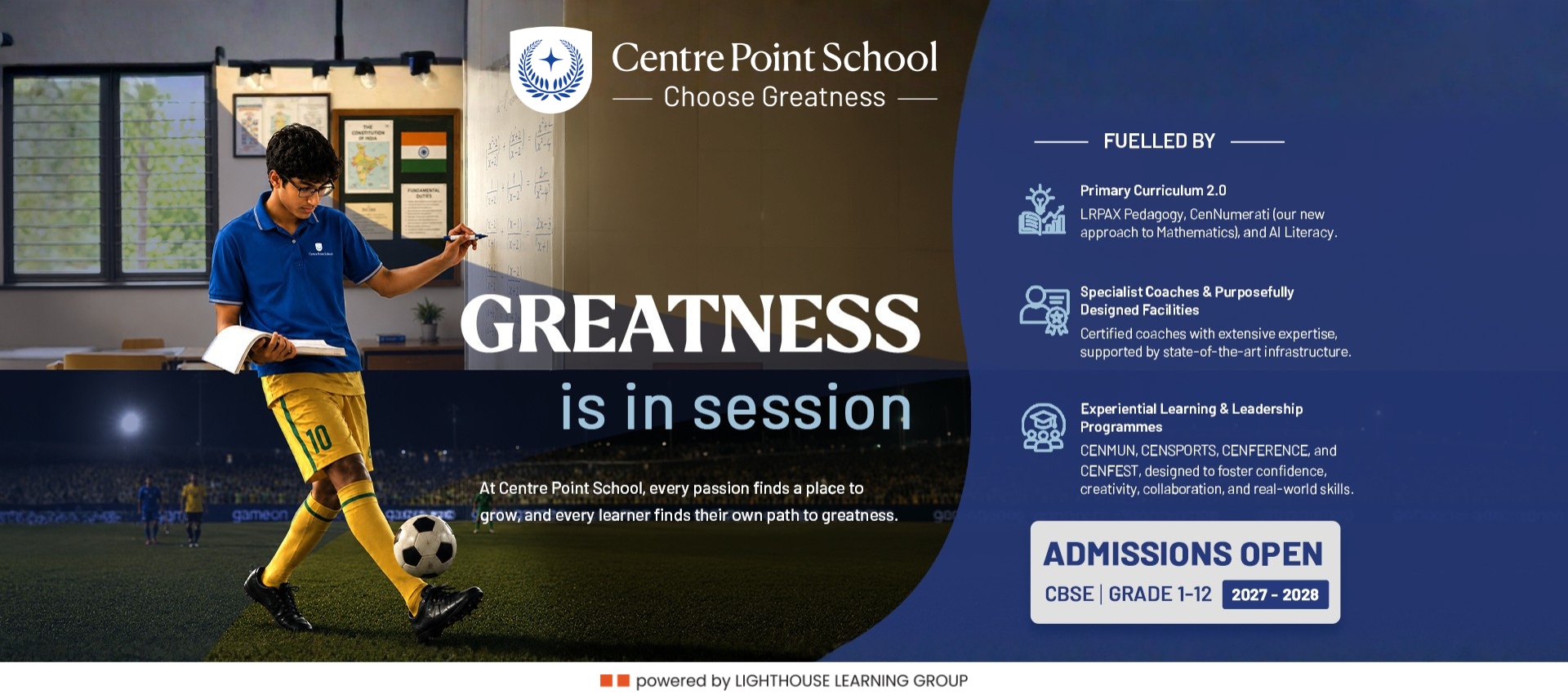
Every kid should have access to a supportive, self-assured, and daily growth-oriented learning environment, as recommended by Centre Point School in Katol Road in Nagpur. In addition to academics, the school places a strong focus on making students feel at ease, understood, and supported throughout their academic careers. With a supportive environment and worthwhile educational opportunities, students are helped to confidently and optimistically adjust to new obstacles. Enquire now to confidently start your child’s educational journey.