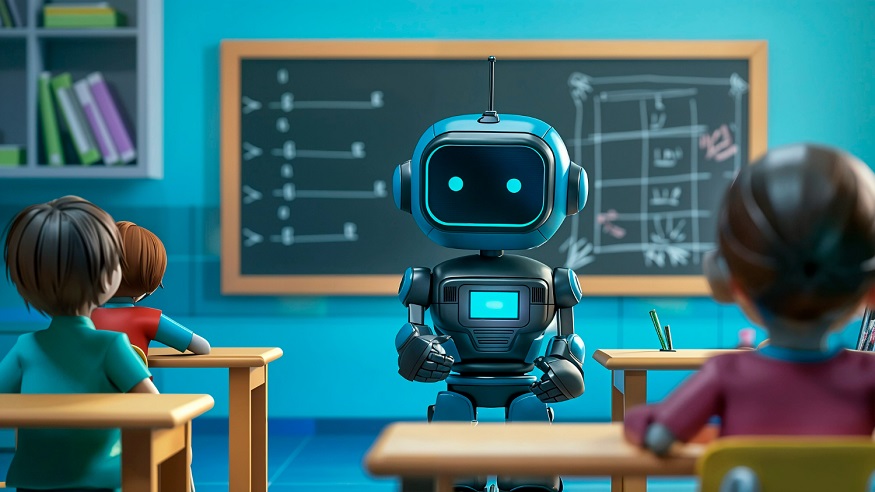
India’s school education is rapidly transforming to meet the demands of a digital-first world. Today, schools are not just teaching theory they are equipping students with practical, real-world skills. One of the most frequently asked questions by parents is: does CBSE include Coding and AI in its curriculum? The answer is a resounding yes. The CBSE Coding curriculum and AI in CBSE syllabus have been thoughtfully designed to build technology literacy from an early age. This progressive shift is part of India’s broader commitment to future skills education empowering every student enrolled in a CBSE school in Nagpur or across the country to think critically, adapt confidently, and thrive in a tech-driven world.
Why Is Coding Being Introduced Early in the CBSE Curriculum?
The inclusion of coding in the CBSE curriculum isn’t just a trend it’s a well-researched educational decision. When students learn coding early, they develop a structured, analytical way of thinking that benefits every subject they study.
Technology Is Part of Everyday Life
Almost every tool students use today from apps to websites is powered by code. Introducing coding in schools India helps students understand the technology they interact with daily, making learning directly relevant to their lives.
A Gentle, Gradual Start
The CBSE Coding curriculum starts with simple concepts and block-based programming, ensuring students learn without anxiety or confusion. There is no steep learning curve just steady, enjoyable progress.
Stronger Problem-Solving Skills
Coding teaches students to decompose problems into smaller, manageable steps. Through coding in schools India, students build logical thinking and decision-making skills that are valuable across all academic disciplines.
Building Skills for a Future-Ready Career
This approach directly supports future skills education, where understanding, applying, and innovating matter more than rote memorisation. Schools like Centre Point School a trusted school in Nagpur are at the forefront of delivering this progressive curriculum.
A Clear and Simple Introduction to AI in the CBSE Syllabus
The word ‘Artificial Intelligence’ can sound intimidating, but the AI in CBSE syllabus is designed to make it entirely approachable. Students don’t need to build AI systems they simply need to understand how AI-powered tools work in everyday life.
- Simple Classroom Approach The AI in CBSE syllabus avoids heavy technical jargon and keeps concepts student-friendly.
- No Pressure of Advanced Learning The focus is on awareness and foundational understanding, not complex development.
- Real-Life Connections Everyday features like voice commands, search suggestions, and recommendation engines illustrate how AI works around us.
- Easy to Understand Real-world examples make it clear and naturally answer whether CBSE curriculum genuinely includes useful AI learning.
What Do Students Actually Learn in Coding Classes?
Coding classes in the CBSE curriculum are structured to build clarity through consistent practice rather than passive study. The emphasis is on doing, not just reading.
- Students learn how to write step-by-step instructions and simple programs
- Interactive exercises and mini-tasks make the CBSE Coding curriculum engaging
- Learning is deliberately paced perfect for students at a CBSE school in Nagpur or anywhere across India
- Coding in schools India develops systematic thinking and orderly problem-solving
- Every activity is designed to reinforce future skills education by building real understanding
How AI Is Introduced Without Overwhelming Students?
The AI in CBSE syllabus is carefully scaffolded so that students are introduced to the topic gradually building understanding layer by layer.
Simple Teaching Style
AI concepts are explained in plain language. The CBSE curriculum ensures teachers use simple terminology and relatable scenarios rather than technical language.
Everyday Examples
Teachers use examples like face recognition, product recommendations on shopping apps, and map navigation to make AI concepts real and relatable.
Visuals and Activities
Students explore how AI works through basic exercises, flowcharts, and visual tools making the learning process in schools in Nagpur and beyond both fun and effective.
Comfortable Pace
Concepts are introduced step by step, ensuring no student feels overwhelmed. This student-centred approach is a hallmark of quality CBSE school admission in Nagpur at Centre Point School.
Learning by Doing: The Hands-On Approach in CBSE Schools
One of the most important aspects of the new CBSE curriculum is the emphasis on experiential learning. Students are encouraged to build, create, and experiment rather than simply read and memorise.
- Students work on small, achievable projects within the CBSE Coding curriculum
- Activities include creating simple games, interactive stories, and basic problem-solving apps
- The AI in CBSE syllabus includes hands-on tools to explore how AI identifies patterns
- Project-based learning boosts engagement and retention
- This model directly supports future skills education by building real, transferable understanding
Everyday Examples Used to Teach AI in the CBSE Syllabus
To make AI relatable, teachers connect concepts to tools students already use voice assistants like Siri or Google Assistant, personalised content recommendations on YouTube, and GPS navigation apps. These examples are embedded in the AI in CBSE syllabus to ensure the subject remains tangible and relevant. For students attending a school in Nagpur, these real-life examples bridge the gap between the classroom and their everyday digital experience. By seeing AI in action, students understand its potential and its limitations a crucial part of modern future skills education.
How These New Subjects Develop Cognitive Abilities?
Coding and AI are not just technical disciplines they are powerful tools for cognitive development. Through the CBSE Coding curriculum, students learn to break down complex problems, plan solutions, and test ideas systematically. This strengthens logical reasoning and independent thinking.
Similarly, the AI in CBSE syllabus encourages students to ask critical questions How do machines make decisions? What data do they use? Why might they be wrong? This curiosity builds strong analytical habits. For any parent exploring CBSE School Admission in Nagpur, understanding this cognitive benefit is key to choosing the right school.
Do Students Find Coding Difficult at School?
A common concern parents raise during school admission is whether coding will be too difficult for their child. The good news is: the CBSE Coding curriculum is designed to be beginner-friendly and stress-free.
- Beginning with Fundamentals Concepts are introduced in a clear, structured sequence
- Learning at a Comfortable Pace Students have adequate time to thoroughly understand each concept
- Teacher Guidance Educators at every CBSE school in Nagpur are trained to support students through challenges
- Confidence Through Practice Regular practice in coding in schools India builds confidence step by step
How Coding and AI Help Students Beyond Exams?
Preparing students for real-world success not just exam success is at the heart of the updated CBSE curriculum. Through the AI in CBSE syllabus, students understand how technology shapes industries, careers, and daily life. The CBSE Coding curriculum fosters creativity and originality skills that are invaluable in future careers. In the era of future skills education, students who master these tools early are significantly better equipped for higher education, professional growth, and entrepreneurship.
Small Projects Students Work On in CBSE Coding Classes
Hands-on projects make abstract ideas concrete. In the CBSE Coding curriculum, students work on tasks that are fun, manageable, and educational:
- Creating simple games, animated stories, or basic mobile apps
- Solving logic-based puzzles that reinforce computational thinking
- The AI in CBSE syllabus includes tasks like pattern recognition and sorting exercises
- Projects build practical experience that aligns with future skills education
- Students at every school in Nagpur following CBSE benefit from this project-first approach
How Are Teachers Adapting to These New Subjects?
Successful implementation of the CBSE curriculum changes depends heavily on teacher preparedness. Educators across CBSE schools in Nagpur are enrolling in specialised training programmes to stay ahead of the curve. They are learning new pedagogical techniques, exploring digital tools, and developing lesson plans that make coding in schools India both effective and enjoyable. Teachers are the backbone of future skills education and their growth directly impacts student outcomes.
How the New CBSE Curriculum Differs From Traditional Teaching
The traditional CBSE curriculum prioritised theory, memory, and written examinations. The updated approach is fundamentally different. The CBSE Coding curriculum encourages students to experiment, make mistakes, and learn from them fostering a growth mindset. The inclusion of AI in the CBSE syllabus signals a clear shift: education is no longer about what you know, but about what you can do with what you know. For parents considering CBSE School Admission in Nagpur, this marks a meaningful upgrade in the quality of learning their child will receive.
How Students Can Continue Practising at Home
Learning doesn’t have to stop at the school gate. Parents and students can reinforce the CBSE Coding curriculum and AI in CBSE syllabus with simple home-based activities:
- Start with beginner-friendly coding platforms and simple logic puzzles
- Use free online tools to practise concepts from the CBSE Coding curriculum
- Explore basic AI tasks such as image sorting or pattern-matching games
- Practise consistently even 15–20 minutes a day builds strong foundations
- This supports future skills education through meaningful self-directed learning
- It shows how coding in schools India extends well beyond the classroom
Common Challenges and How to Handle Them
It is completely normal for students to feel uncertain when learning something new. Both the CBSE Coding curriculum and AI in CBSE syllabus can seem complex at the start. However, with consistent practice, dedicated teacher support, and parental encouragement, students at any school in Nagpur can overcome these hurdles. The key principles are patience, persistence, and positivity. Schools like Centre Point School ensure every child receives the guidance they need to grow confidently.
Why This Change Is Critical for India’s Future
The world is changing faster than ever, and education must keep pace. The CBSE Coding curriculum and AI in CBSE syllabus are not optional extras they are essential building blocks for India’s next generation of innovators, entrepreneurs, and problem-solvers. Students who develop these skills early are better prepared for competitive higher education and emerging career fields. For families seeking CBSE School Admission in Nagpur, choosing a school that truly embraces future skills education is one of the most important decisions they can make.
Frequently Asked Questions
Does CBSE include Coding and AI in its curriculum?
Yes, the CBSE curriculum now formally includes both Coding and Artificial Intelligence as subjects, designed to help students from middle school onwards build practical technology skills.
From which class does coding start in CBSE?
Coding is typically introduced from Class 6 onwards in the CBSE Coding curriculum, beginning with basic concepts such as block-based programming, algorithms, and problem-solving.
Is AI difficult for school students to understand?
No. The AI in CBSE syllabus is taught using simple, real-life examples and visual methods. Students at any CBSE school in Nagpur can grasp the basics without any prior technical knowledge.
How does coding help students in the future?
Coding builds logical thinking, creativity, and problem-solving skills all of which are core to future skills education. These abilities are valuable not just in technology careers, but across every field.
How do I apply for CBSE School Admission in Nagpur?
You can visit or contact Centre Point School directly for details on CBSE School Admission in Nagpur. Admissions are open across all three campuses.
Conclusion
The incorporation of Coding and AI into the CBSE curriculum marks a transformative moment in Indian school education. Students are no longer limited to textbooks they are being equipped with tools to think, create, and solve real-world problems. This shift is nurturing a generation of confident, capable learners who are ready for the future. At Centre Point School, one of the most respected CBSE schools in Nagpur, we make Coding and AI accessible through practical, student-centred teaching methods. Whether you are exploring school admission for the first time or looking to transfer your child to a more progressive learning environment, we invite you to experience the difference.
With campuses on Katol Road, Wardhaman Nagar, and Amravati Road, Centre Point School is the premier CBSE school in Nagpur for holistic, future-ready education. For CBSE School Admission in Nagpur, contact us today or visit .
Explore More from Our CBSE Syllabus Blog
If you found this article helpful, you may also enjoy these related reads from Centre Point School’s blog:
How to Complete CBSE Syllabus Faster: Study Plan for Students
Relevance: Students learning Coding and AI as new CBSE subjects will benefit from a structured study plan to manage the expanded CBSE curriculum alongside core subjects.
Important Topics in CBSE Syllabus to Score 90%+ in Exams
Relevance: Parents and students interested in Coding and AI subjects will want to understand which topics across the full CBSE curriculum carry the highest weightage for top exam performance.