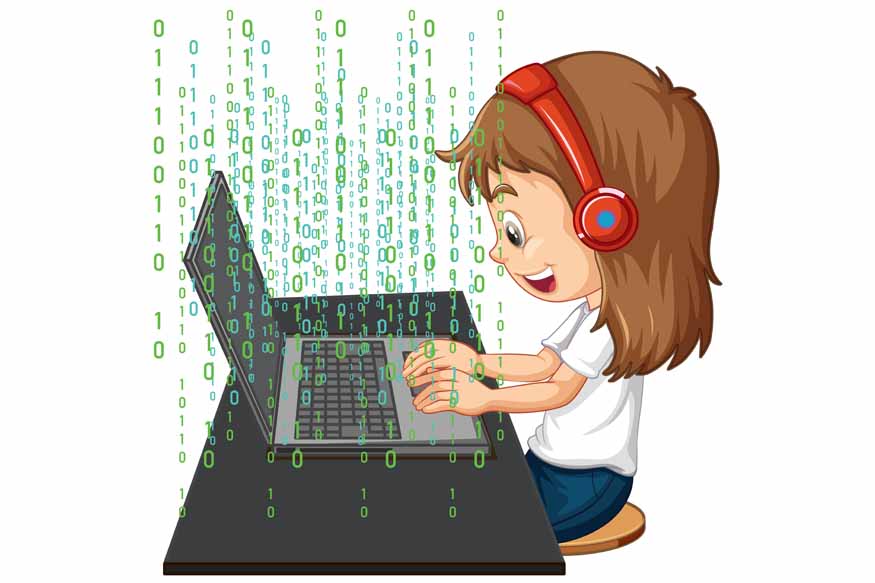
Children who learn to code get more than just a technical talent; it transforms their way of thinking. Solving a code puzzle develops patience, logical thinking, and the capacity to divide complex tasks into smaller, more manageable parts. These apply to every topic and circumstance that calls for critical thinking, not only technology. Children who understand the development of games and apps have a distinct relationship with technology; instead of being passive consumers, they are aware of what goes on behind the screen. Starting this early makes a real difference, and a school in Nagpur that introduces coding as part of ordinary learning gives children a head start that builds confidence long before they need to worry about future jobs.
What Is Coding and Why Is It Important for Children?
Coding is simply the process of giving a computer clear instructions to follow. What makes it worth learning early is what it builds along the way — logical thinking, attention to detail and the ability to work through a problem without giving up. Programming for kids does not need to be difficult to make a lasting difference. As technology becomes part of everyday life, many parents select schools that involve coding in learning.
Why Is Coding Education Being Introduced in More Schools?
Schools have noticed what the world already knows — technology isn’t going anywhere, and understanding how it works is becoming as fundamental as reading or maths. Coding is becoming a part of more classrooms because it helps kids understand how technology works, not simply how to use it. Additionally, it connects education to practical skills.
How Coding Helps Children Think Differently?
Coding teaches children to slow down and understand a problem before trying to solve it. Breaking tasks into steps, testing what works and fixing what doesn’t builds patience and sharper decision-making. As computer coding skills develop, mistakes stop feeling like failures — they become part of the process, which is a way of thinking that carries into everything else.
The Real-Life Benefits of Learning Coding
Coding offers benefits that extend beyond computers. Children learn how to plan, organise ideas and complete projects with confidence. They also get better at teamwork when working on coding assignments with classmates. Practical activities give children opportunities to use classroom learning in meaningful ways.
Can Coding Improve Academic Learning?
Coding’s benefits don’t stay confined to technology class. The logical thinking it builds supports mathematics, the structured approach helps across subjects and the problem-solving mind set makes challenging work feel more manageable. Students who code regularly approach academics with more confidence. During the CBSE school admission process, coding in the curriculum signals something specific — that the school is invested in how children think, not just what they know.
Does Every Child Need to Learn Coding?
Not every child who learns to code will go on to build software — and that’s not really the point. Coding develops practical thinking skills that are useful in many areas of life, beyond technology. Coding classes for children are designed to be exploratory rather than pressured, which means children with different strengths and interests can engage with it on their own terms and still walk away with something genuinely useful.
When Is the Best Time to Start Learning Coding?
There’s no single right age to start — younger children take to visual platforms and game-based coding naturally, while older students can move into more structured projects. A gradual approach to coding is common at a Top School in Nagpur, helping students understand each concept before moving on to the next.
How to Keep Children Interested in Coding?
The best way to maintain interest is by making coding enjoyable. Small projects, interactive games and creative challenges encourage children to keep learning. Learning should focus on exploration instead of memorising commands, allowing students to build confidence through regular practice.
Mistakes Parents Should Avoid When Introducing Coding
Children learn coding differently, so rushing their progress or measuring them against others can affect their confidence. Steady encouragement helps them enjoy the learning process. Celebrating small wins keeps curiosity alive. Schools that take STEM education seriously understand this — because creativity and exploration matter just as much as the technical skills being learned.
Choosing the Right Coding Activities for Different Age Groups
Simple games suit younger learners, whereas older children often enjoy creating animations and beginner-friendly apps. Each stage builds confidence and technical understanding naturally. What matters is matching the activity to where the child actually is, not where they’re expected to be.
How Coding Prepares Children for a Technology-Driven Future?
Strong technology skills are becoming essential in today’s world. Coding helps children understand technology while preparing them for future opportunities. Innovation, adaptability and independent thinking grow naturally through this process. At CBSE schools in Amravati Road where coding is part of the curriculum, students aren’t just learning a technical skill — they’re developing a way of thinking that stays useful whatever direction their career eventually takes. Visit to know more about Why Computer Education Is Essential for Students in the Digital Age
Frequently Asked Questions
1. Why should youngsters study coding?
Coding develops creativity, logical thinking, and problem-solving abilities.
2. When should children start learning coding?
Children can start exploring basic coding through fun, age-appropriate activities from around 5 years old.
3. Does coding help students in school?
Yes. Coding promotes logical thinking, focus and problem-solving, which support learning across courses.
4. Do students need to be proficient in maths to learn coding?
Absolutely not. Basic coding focuses on patterns, logic and basic instructions rather than complicated maths.
5. Do children need to become programmers to benefit from coding?
No, learning to code generates abilities that are useful in both daily life and a variety of professions.
Final Thoughts: Is Coding Worth Learning for Every Child?
Coding is worth learning not because every child will become a developer but because of what it builds along the way — curiosity, persistence and the ability to think through problems clearly. Computer coding skills developed early don’t expire; they stay relevant across subjects, careers and situations that haven’t even emerged yet. Whether it starts in school or at home, the foundation it creates is one of the more genuinely useful things a child can carry into the future.
At Centre Point School, coding is introduced through age-appropriate activities that build confidence, creativity and problem-solving naturally. As one of the leading CBSE schools in Amravati Road, the focus is on developing practical digital skills alongside academics rather than treating them as separate. For families considering CBSE school in Nagpur, a school that introduces coding early gives children a foundation that matters well beyond the classroom.