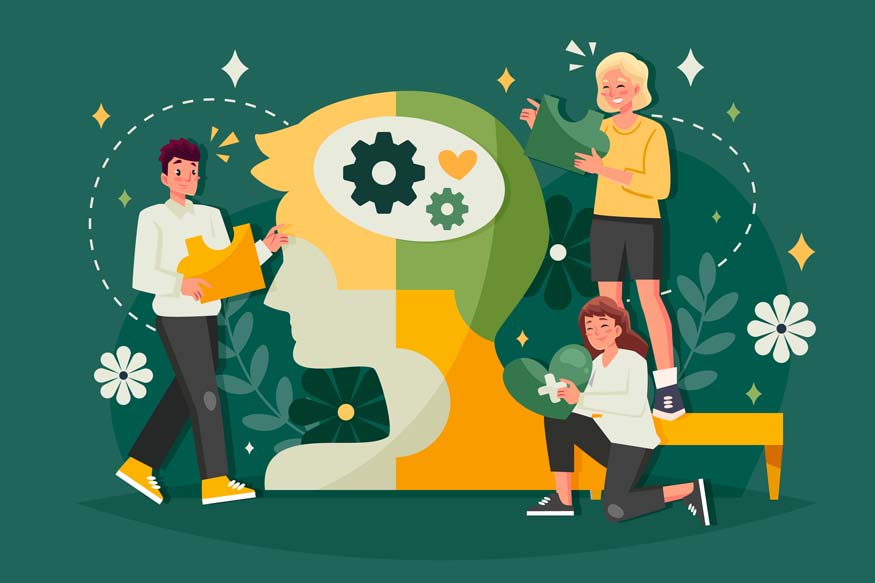
Imagine your child coming home and instead of discussing grades, describing how they stepped in to solve a problem between classmates during their break. For a parent, that display of maturity can feel significantly more impactful than top marks in math. Schools are finally beginning to acknowledge that we have leaned too heavily on test performance for a long time. While textbooks teach facts, the skills needed to navigate life require something else entirely. Since academic excellence is no insurance policy against the stresses of growing up, parents and teachers alike are starting to wonder if the relentless pressure to succeed is truly serving the child’s best interests. This is exactly why there is a growing shift toward SEL in Indian schools. It is not just a trend but a major rethinking of what we mean when we talk about a student being ready for the future. It is about moving toward a CBSE focus on personality development that treats children as whole people not just test-taking machines.
Defining the Core of Social & Emotional Learning
So, what are we actually talking about when we use the term social emotional learning benefits? It sounds a bit like corporate jargon, but the concept is beautifully simple. At its heart, it is about teaching children how to understand their own feelings, manage their reactions and relate to others with genuine kindness. Think of it as the hidden curriculum that runs alongside history and science.
When we talk about this approach, we are focusing on a few essential pillars:
- Self-Awareness: Helping a child recognize what they are feeling, whether it is frustration, excitement or nervousness before they act on it.
- Emotional Control: Learning how to take a breath and pause when things go wrong, rather than having an immediate reactive outburst.
- Teamwork and Communication: Discovering how to work with someone who has a completely different idea and learning to articulate one’s own thoughts clearly.
- Empathy: The ability to step into someone else’s shoes and understand their perspective which is often harder than solving any algebraic equation.
- Decision-Making: Practicing how to make choices that are healthy, safe and respectful to others.
These aren’t just soft skills. They are the foundational muscles that kids need to navigate everything from a playground dispute to a high-stakes project in their future careers. When a child learns how to handle their emotions their academic performance often improves because they aren’t constantly fighting internal battles.
The Changing Face of the Classroom
Why is the Central Board of Secondary Education (CBSE) pushing for this shift so hard right now? To put it bluntly the world our kids are graduating into is far more complex than the one we faced. Academic pressure is at an all-time high and students are often reporting higher levels of stress and burnout than ever before. The National Education Policy (NEP) has rightly identified that our old model which leaned heavily on rote memorization wasn’t preparing kids for the real world.
Now, you will see a deliberate shift. Instead of just lecturing, teachers are guiding. You’ll find classrooms filled with collaborative projects, open-ended discussions and presentations that force students to stand up, speak out and listen. Integrating emotional intelligence for kids into the daily routine means that a child who struggles with math might find their confidence through a leadership role in a debate team or a community service project. This balanced approach ensures that schools aren’t just processing information they are growing good human beings.
Real-World Benefits for Your Child
The social emotional learning benefits for students are vast and they often ripple outward into every area of their lives. When a school environment prioritizes these skills, you often see a clear difference in the hallways.
- Confidence Boost: When a child learns they can handle difficult social situations their general self-esteem skyrockets.
- Stronger Friendships: By learning how to communicate effectively, kids form deeper more stable bonds with their peers.
- Problem-Solving Power: They stop seeing a mistake as a disaster and start seeing it as a puzzle to be solved.
- Reduced Burnout: By naming and managing their stress students learn how to stay regulated even during heavy exam seasons.
- Indirect Academic Success: A regulated, happy student is a focused student. When the emotional clutter is cleared the actual learning becomes much easier.
It’s about resilience. Life will throw googlies and the goal of this modern educational shift is to ensure that when those googlies come our children have the emotional bat to handle them.
Putting Philosophy into Practice
If you are looking for a CBSE school in Nagpur, you have likely noticed that the best institutions are the ones that have integrated these principles into their daily rhythm. It isn’t just about a poster on the wall that says Be Nice. It is about a structural commitment to growth.
In a top school in Nagpur, you will see this in action through:
- Active Learning: Students working in groups to solve real-world problems, which forces them to negotiate and collaborate.
- The Arts and Sports: These aren’t extra activities. They are where students learn discipline, fair play and how to express themselves safely.
- Counselling and Wellness: A dedicated space where students can speak with trained professionals who understand the unique pressures of the modern academic landscape.
- Leadership Opportunities: Giving students the chance to mentor younger kids or organize events, which builds a massive sense of responsibility.
Choosing the right school in Wardhaman Nagar or any part of the city now involves asking these questions. You want to see how the school handles conflict. You want to know what they do to encourage a student who feels overwhelmed. The best school in Wardhaman Nagar will have a clear and honest answer about their approach to character building.
The New Standard for School Admissions
It is fascinating to watch how the conversation has changed during school admissions in Nagpur. A few years ago, the conversation was almost exclusively about the school’s past board results, the teacher-student ratio and the infrastructure. While those things remain important, we are seeing a massive shift. Today, parents are asking about the culture.
They are asking, “How do you help my child deal with failure?” or “What programs do you have for social development?”
This is a healthy change. During school admissions in Nagpur, parents are realizing that a child’s long-term success is tied to their ability to be adaptable, empathetic and resilient. A top school in Nagpur recognizes this and they make sure their admissions process and their school culture reflect these values. It is a partnership between the home and the school and parents are increasingly looking for partners who care about a student’s overall development as much as they do.
Centre point School: Our Commitment to Holistic Excellence
At Centre point School, we firmly believe that the classroom is the primary laboratory for life. We aren’t just teaching students how to answer questions but are teaching them how to ask the right ones and how to engage with the world around them with integrity and empathy. Our commitment to the CBSE curriculum is paired with a deep-seated belief that character development is just as serious as academics. From our leadership programs to our integrated wellness initiatives, we strive to create an environment where every student feels seen, heard and supported. We aren’t just preparing students for a board exam but are also preparing them for the chapters of life that come long after the school bell rings for the final time.
Frequently Asked Questions
Is SEL just another word for “behaviour management”?
No, it goes much deeper. Behaviour management is often about enforcing rules, whereas SEL is about teaching children the internal skills like empathy and self-regulation to make good choices on their own.
How do you measure emotional intelligence?
While you won’t see a grade for empathy on a report card, you see it in the school climate. We look at a decrease in conflicts, an increase in student participation and the ability of students to handle feedback well.
Does this take time away from real academics?
It enhances it. When students are less anxious and better at collaborating, they spend more time focused on learning and less time dealing with distractions or interpersonal drama.
Can parents help with this at home?
Absolutely. You can practice by naming emotions during dinner conversations, encouraging your child to express their frustration and modelling how you handle your own stresses.
We are moving past an era where a student’s worth was defined by their ability to memorize a textbook. The focus has turned toward creating individuals who are emotionally balanced, socially capable and ready for whatever the future holds. By embracing Social & Emotional Learning we are doing more than just improving grades, we are building a foundation of resilience that will last a lifetime. It is a shift that puts the human back into education and ensuring our children are not just successful students, but truly capable, kind and confident people. As we look at the landscape of education in India it is clear that the schools investing in the hearts and minds of their students are the ones that will truly lead the way.