The traditional educational concept of learning things by heart and passing tests is being abandoned. These days, holistic development—a method that views education as a whole-person experience—is the key to real growth. Holistic development encourages a student’s intellectual, emotional, social, physical, and creative well-being in addition to their academic performance. We help students prepare for real-life challenges by focusing on non-academic skills for students such as emotional strength, teamwork, and making the right decisions. This shifts education away from only competing for high marks and instead builds a strong base for a balanced, successful, and meaningful life.
Changing Attention: The Need for Education to Go Beyond Grades
In the past, success was frequently determined solely by grades and position, and education was primarily concerned with exam performance and obtaining high marks. Today’s education, however, is progressively shifting toward the development of the whole person, encouraging students understand ideas rather than just memorise them. Deeper knowledge, critical thinking, and preparedness for the actual world are all developed in a balanced manner with the support of a robust holistic education approach. This shift is evident in Schools in Nagpur, where instruction is carefully planned to maintain a balance between strong academic performance and meaningful personal and emotional development.
The Undiscovered Talents Schools Frequently Ignore
A lot of important skills that are useful in the real world are not taught in textbooks. For this reason, through various activities, schools are now promoting creativity, collaboration, communication, emotional equilibrium, and improved decision-making. These abilities are crucial to a student’s entire development. Students at a school in Katol Road have the chance to go beyond books and acquire real-world experience in a more useful and interesting way.
Building Confident Learners, Not Just High Achievers
Confidence is becoming an important part of student development in today’s education system, as it helps children express themselves without fear. Schools are now focusing more on helping students speak clearly, share their ideas openly, and face challenges with a positive and responsible attitude. A strong life skills in school programme supports this type of overall personality growth effectively and consistently throughout school life. This method is widely followed in a Top school in Nagpur, where students are encouraged to build both confidence, discipline, and long-term capability for future success.
How Everyday School Life Shapes Personality?
Every school activity has a significant impact on how a student behaves, thinks, and develops their personality over time. Building discipline, leadership, communication, and teamwork skills is facilitated by group discussions, morning assemblies, athletic events, and classroom interactions. This overall balanced growth is an important part of a well-structured 360 degree development CBSE system that focuses on complete learning. Such meaningful practices are commonly seen in Schools in Nagpur, where daily learning is carefully designed to support complete student development in every aspect.
Learning Through Experience, Not Just Textbooks
Practical exposure is essential for providing students with a deeper, clearer, and more meaningful grasp of a subject than theory alone. Activities, experiments, projects, field trips, and real-world learning experiences make education more engaging, enjoyable, and relatable. A strong focus on non-academic skills for students ensures that this practical and experiential growth is developed properly and consistently. This approach is also widely promoted in our School in Katol Road, where experiential learning is an important and regular part of the teaching process for better understanding.
Why Errors and Failures Are Important for Students’ Development?
Every learning process involves mistakes, which are crucial and normal since they show pupils where they may develop. Children gradually become resilient and patient in the face of difficulties when they are allowed to fail and try again. This educational process is a crucial component of life skills in school, where positive thinking and emotional fortitude are gradually developed. A robust 360 degree development CBSE system helps students gain confidence by encouraging them to see failure as a teaching moment rather than a setback.
The Impact of Curiosity on a Child’s Growth
Children’s understanding and learning of the world around them are greatly influenced by their curiosity. Students naturally think more deeply and understand topics better when they are encouraged to ask questions. This curiosity-driven learning is supported in an organised and significant way by a comprehensive approach to education. This approach is highly recommended in a top school in Nagpur, where students are encouraged to investigate concepts outside of the classroom and cultivate their capacity for independent thought.
How the School Environment Affects Behaviour and Thought?
Students’ everyday thoughts, behaviours, and interactions with others are greatly influenced by their educational environment. Children who are in safe, encouraging, and supporting environments are more self-assured and driven to learn more effectively. Emotional and social development are given equal weight with academics in a 360 degree development CBSE system. At the CBSE school in Nagpur, where activities are intended to foster cooperation, discipline, and respect among students, this kind of balanced learning is frequently observed.
Developing Students’ Independence at a Young Age
Independence helps students make better and more confident decisions in life. When children are given small responsibilities and simple tasks to manage on their own, they slowly learn how to take ownership and become more responsible. This process supports the development of non-academic skills for students, helping them build confidence along with practical understanding. A School in Katol Road encourages this kind of learning by allowing students to take responsibility in a structured and supportive environment.
Why Does Learning Benefit from Real-Life Experience?
When students see and experience things in real life, they understand lessons more clearly and remember them better. Activities like field trips, hands-on projects, and practical learning make studying more interesting and easy to connect with everyday life. A holistic education approach helps students go beyond textbooks and learn through real experiences. Many Schools in Nagpur are now using this method to make learning more engaging and to help students understand concepts in a better way.
How Collaboration Prepares Students for the Future Workplace?
Teamwork is an important skill that helps students prepare for future academic and professional environments. Group activities teach them how to share ideas, listen to others, and work towards common goals. These life skills in school are essential for building cooperation and communication abilities. A strong 360 degree development CBSE system ensures that students are trained to work effectively in team-based situations from an early age.
The Connection Between Mental Wellbeing and Learning
Mental wellbeing plays a major role in how well students learn, focus, and perform in school activities. When students feel emotionally supported, they are more confident and able to handle academic pressure. A holistic education approach helps in creating a balanced learning environment that supports emotional health. Many Top school in Nagpur institutions are now including counselling and mindfulness activities to support overall student development.
Encouraging Students to Think, Not Just Memorise
Modern education is shifting towards developing thinking skills rather than depending only on memorisation. Students are encouraged to analyse situations, solve problems, and understand concepts deeply. A non-academic skills for students focus helps in building analytical and decision-making abilities. This approach is strongly followed in a Top school in Nagpur, where critical thinking is an important part of daily learning.
Developing a Growth Mind set in School Education
Students that have a growth mind set are better able to comprehend that skills may be developed through practice, effort, and learning from mistakes. This method helps students maintain their motivation in the face of challenges. Students’ perseverance and adaptability are greatly enhanced by a life skills curriculum. This kind of thinking is supported by a CBSE school in Nagpur that encourages kids to view obstacles as chances to grow.
Education That Prepares Students for Life, Not Just Exams
Education today aims to prepare students for real-life situations rather than focusing only on academic performance. Schools are now working towards building confident, capable, and responsible individuals. A strong 360 degree development CBSE system ensures balanced growth in all areas of learning and personality. This approach is widely adopted in Schools in Nagpur, where focus is placed on overall development and preparing students for future challenges in life.
FAQs
What does educational holistic development mean?
In education, holistic development refers to a student’s complete development, covering not only test scores but also academic performance, skills, emotions, and personality.
For students, why is holistic education important?
Along with academic knowledge, it helps students develop practical skills like self-assurance, communication, and decision-making.
What are pupils’ non-academic skills?
These include the ability to communicate, work in a team, be creative, be a leader, and solve problems.
What is 360 degree development CBSE?
It is a well-rounded approach to education that prioritises academics, athletics, the arts, and personal development all at once.
In what ways can holistic education benefit students going forward?
It helps students to overcome obstacles in real life and develop into self-assured, self-sufficient adults.
Conclusion
The cornerstone of modern education is holistic development, where academic achievement is no longer the only priority. Through the development of critical thinking skills, self-assurance, communication, and emotional intelligence, a robust holistic education approach supports students’ balanced growth. Students are encouraged to study in a more meaningful and useful way rather of relying solely on memorisation and tests. A CBSE school in Nagpur, where instruction is intended to encourage both academic learning and personal development, is a prime example of this change. The goal is to educate students not only for tests but also for real-world scenarios where information is not as important as abilities, awareness, and flexibility.
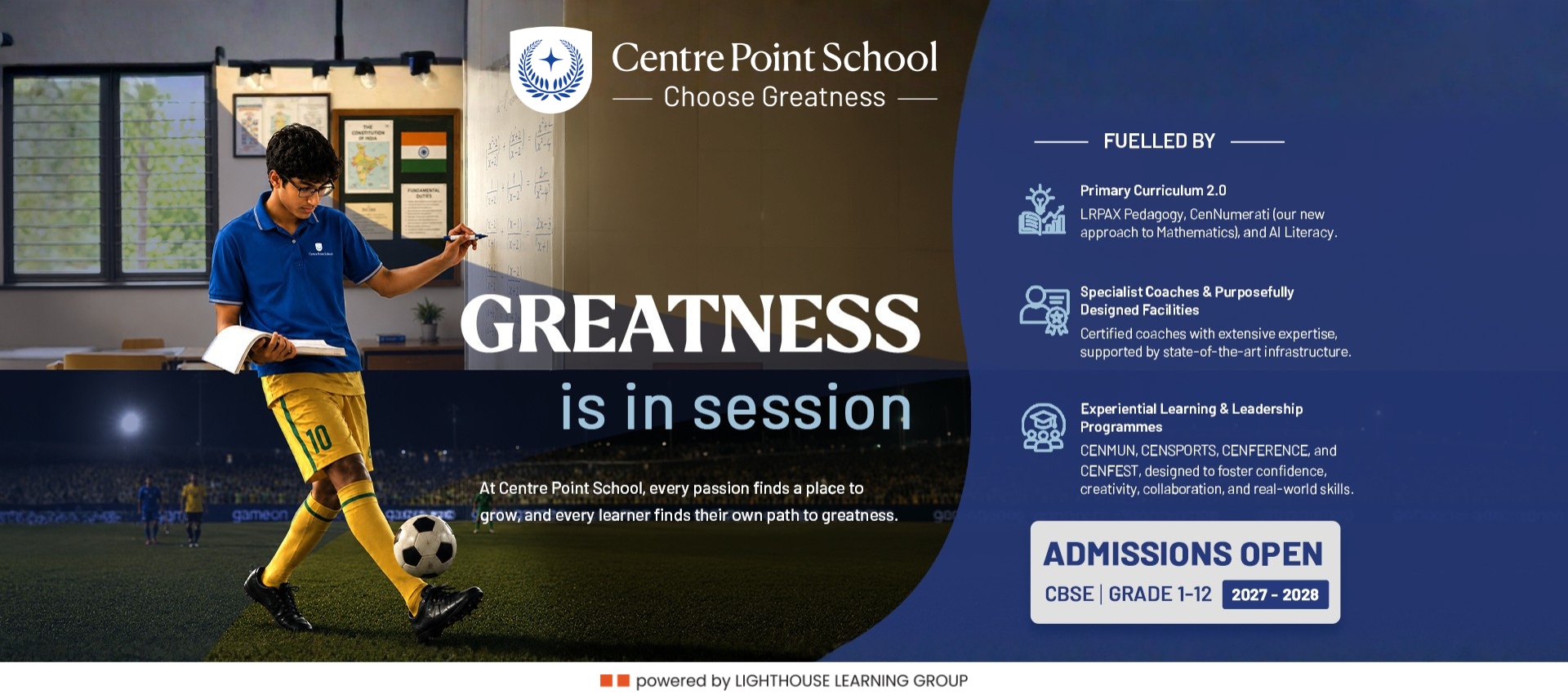
The goal of Centre Point School on Katol Road is to create an environment in which children actively participate in their education rather than only listening. The school promotes discussion, inquiry, and practical understanding rather than restricting education to textbooks. This all-encompassing approach to teaching encourages student’s natural curiosity and self-assurance as part of their everyday learning process. Every student is guided in a balanced manner so that education develops both real-world development and academic understanding. To learn more about how this method shapes learners who are prepared for the future, enquire now.