
If you have stepped into a school lately, you might have noticed something different. The air feels a little less heavy. For decades, the Indian education system was often criticized for being a memory test. Students were expected to swallow massive amounts of data and spit it out during exams. But things are finally shifting. With the rollout of the NCERT new books 2026-27, the focus is moving from how much can you remember to how much do you actually understand.
Let’s look at it this way: If the old system was about building a library in a student’s head, the new system is about teaching them how to use the books in that library. This isn’t just a minor update or a change in cover design. It is a fundamental shift in the academic DNA of our schools. Especially for those looking at a CBSE school in Nagpur, these changes are going to redefine the daily classroom experience. Whether you are a parent worried about your child’s stress levels or a student wondering if you’ll still have to memorize 50-page chapters, this guide breaks down exactly what is happening with the latest curriculum updates.
The Core Philosophy: NCERT vs old textbooks
When we sit down to compare NCERT vs old textbooks, the first thing that jumps out isn’t the content, but the intent. The older books were designed during a time when information was scarce. You needed the textbook to tell you everything because you couldn’t just Google it. Today, information is everywhere. What students lack is the ability to filter that information and apply it.
The NCERT new books 2026-27 have been crafted with this modern reality in mind. You might notice that the language is much more conversational. Instead of dense, academic jargon that requires a dictionary every two sentences, the new books explain things as if a mentor is talking to you. It’s a move toward “active learning”. In the old days, you read a chapter and answered questions. Now, the book asks you questions while you read, forcing your brain to engage with the material rather than just scanning the lines.
Here’s something interesting: the reduction in content isn’t a sign of “dumbing down” the curriculum. It’s actually the opposite. By removing the repetitive or outdated bits that didn’t really add value the updated NCERT content allows students to spend more time on complex topics. It’s about quality over quantity. If a student understands the “why” behind a mathematical formula, they don’t need to do 100 repetitive practice problems to “get it”.
Navigating the Changes in NCERT syllabus
One of the biggest talking points in staff rooms and parent-teacher meetings has been the changes in NCERT syllabus. The National Council of Educational Research and Training (NCERT) didn’t just take a pair of scissors to the old books; they used a scalpel. They looked at what was actually necessary for a child’s development in the year 2026 and beyond.
For instance, you’ll find that many overlapping topics have been removed. In the past, a student might learn about the “Water Cycle” in Grade 4, Grade 5 and Grade 6 with almost no difference in depth. The CBSE textbook revision has streamlined this. Now, once a concept is mastered, the next grade builds on it rather than just repeating it. This saves a massive amount of time and prevents students from getting bored with the same old material.
Furthermore, the syllabus now includes more contemporary issues. We are talking about digital literacy, environmental sustainability and even basic financial awareness in some contexts. The world is changing fast and the curriculum is finally trying to keep up. This is particularly relevant for families seeking School admission in Nagpur, as the city’s top institutions are already preparing their faculty to handle these new, more dynamic modules.
Why This Matters for a Top school in Nagpur
Nagpur has always been an educational hub, but the competition is stiffer than ever. If you are looking for a Top school in Nagpur, you shouldn’t just be looking at the building or the sports facilities. You should be asking how they are implementing the updated NCERT content. A school might have the newest books, but if the teachers are still using old-school rote learning methods, the benefit to the student is zero.
The best schools in the city are those that embrace the spirit of the CBSE textbook revision. They are creating “maker spaces” by holding more debates and encouraging project-based learning. This is because the new books are designed to be explored, not just read. For parents, this means that “homework” might look a bit different. Instead of writing “Answers 1 to 10” your child might be asked to go into the garden and observe a biological process they read about that morning.
Local Perspectives: School in Wardhaman Nagar and Beyond
If you are specifically searching for a School in Wardhaman Nagar, you’ll find a community of educators who are deeply invested in these changes. Being a vibrant part of the city, schools here are often at the forefront of adopting new technologies. The transition to the new NCERT books is a perfect opportunity for these schools to integrate digital tools with physical textbooks.
Similarly, if you look at CBSE School in Nagpur, the conversation is the same: how do we make this transition smooth? These areas host some of the most respected educational institutions in the region. They understand that a School admission in Nagpur isn’t just about getting a seat in a classroom; it’s about ensuring the child is ready for the challenges of higher education and professional life. The new NCERT framework is the first step in that preparation.
A Direct Comparison: NCERT vs old textbooks (The Practical View)
Let’s get into the weeds for a second. If you put the old Science or History book next to the new one, what do you actually see?
- The Visual Factor: The older books had tiny, grainy black-and-white photos or very basic diagrams. The new editions use high-quality infographics. We know that the human brain processes images much faster than text and the new books capitalize on this.
- The “Check Your Understanding” Boxes: In the past, you only checked your knowledge at the end of the 30-page chapter. The new books have small “pause and think” sections every few pages. This prevents a student from reading an entire chapter only to realize they didn’t understand the first page.
- Real-Life Context: Old books often felt like they were written in a vacuum. The new content constantly links back to the real world. A math problem might be framed around calculating the GST on a grocery bill, or a science concept might be explained using the technology in a smartphone.
This shift is why School admission in Nagpur has become such a hot topic. Parents want their children in an environment that prizes this kind of practical, “real-world” intelligence over just getting a high percentage on a report card.
The Teacher’s Role in the New Era
We often talk about students and parents, but what about the teachers? For a teacher at a CBSE school in Nagpur, the new books are both a blessing and a challenge. On one hand, they have more interesting material to work with. On the other hand, they can no longer just stand at the front and lecture for 40 minutes.
The new books demand participation. They demand that the teacher becomes a facilitator. If a book asks a student to discuss with your partner why the industrial revolution started in Britain, the teacher has to manage that discussion rather than just providing the four bullet points for the answer. This is why professional development is so crucial right now. The schools that are investing in teacher training are the ones that will truly see the benefits of the NCERT new books 2026-27.
Addressing the “Less Content” Myth
There is a common fear among parents that “less content” means “less knowledge”. You might hear people say, “In my day, we studied twice as much!” But let’s be honest, how much of that did we actually retain? Most of us forgot 90% of the syllabus the moment the final exam was over.
The updated NCERT content aims for “Deep Learning”. Instead of skimming the surface of twenty topics, students might dive deep into ten. The goal is to develop “first principles thinking”. If a child understands the core logic of a subject, they can figure out the details themselves. This is a much more valuable skill in the modern workforce than being a walking encyclopaedia. This philosophy is what makes the current CBSE textbook revision so revolutionary. It’s a brave move to say “less is more” but in education, it’s often true.
Logistics: Getting Ready for the New Academic Year
As we approach the 2026-27 session, there are a few practical things parents should keep in mind. First, don’t rush to buy old second-hand books from seniors. While it’s great for the environment and the pocket, the NCERT vs old textbooks difference is significant enough that using an old version might actually confuse the student.
Secondly, if you are planning a School admission in Nagpur, ask the admissions office about their transition plan. How are they integrating the new syllabus? Do they have the updated digital resources? This is especially important for senior secondary students (Grades 9-12), where the changes in the syllabus can have a direct impact on competitive exams like JEE or NEET.
Final Thoughts: Is it Better for the Students?
At the end of the day, that’s the only question that matters. Does this help the kids? From everything we’ve seen, the answer is a resounding yes. By reducing the pressure of rote memorization, we are giving children their childhood back. We are allowing them to be curious again.
The NCERT new books 2026-27 are a bridge to a better way of learning. It’s an exciting time to be a student in India. The books are finally catching up to the potential of the minds reading them.
Why Choose Centre Point School?
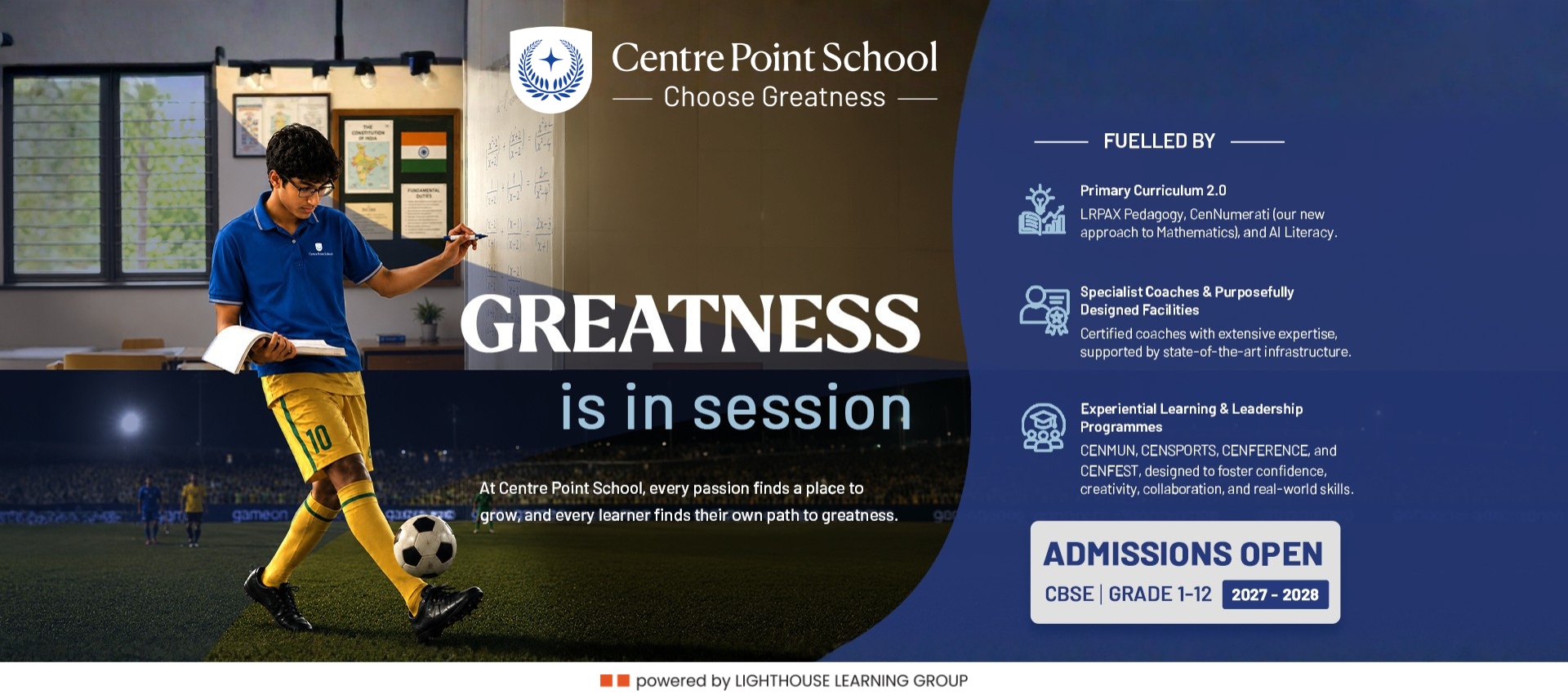
At Centre Point School, recognized consistently as a Top school in Nagpur, we don’t just follow the curriculum, we bring it to life. We believe that every child deserves an education that prepares them for the future, which is why our teachers are already trained in the latest CBSE textbook revision strategies.
If you are looking for a seamless CBSE School admission in Nagpur or want to know more about our CBSE School Admission process, our team is here to guide you. Contact us today for CBSE Admission and ensure your child learns in an environment that values innovation and understanding.
Practical Takeaways for Parents:
- Check the Edition: Ensure you are buying the “2026-27” revised editions.
- Encourage “Why” Questions: Since the books focus on concepts, encourage your child to ask why things happen rather than just what happened.
- Talk to the School: Stay in the loop with your child’s teacher about how the new syllabus is being paced.
- Focus on Skills: Use the extra time saved from reduced content to let your child pursue a hobby or a skill-based activity.