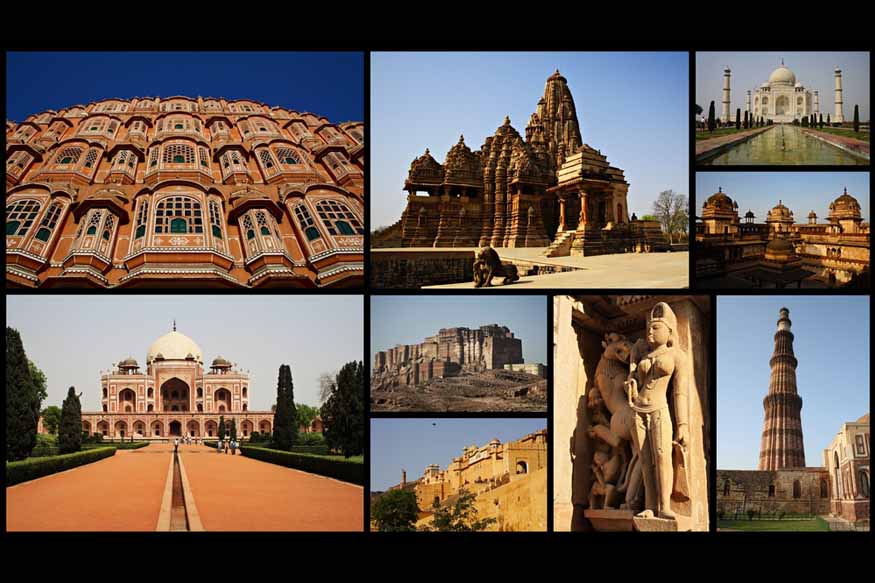
India’s historic monuments are visible riddles left by the past, not only beautiful surroundings. We often talk about who constructed them and when, but we hardly ever consider why—or the sheer mentality of how they managed to do it. Imagine engineers creating stone pillars that ring like musical instruments, or workmen carving a huge, multi-story temple directly into a single rock face. Beneath the cracked marble and sandstone are breathtaking tales of obsession, genius, and lost science. Let’s look behind ordinary dates found in textbooks and discover the intriguing histories of these architectural wonders.
The Tales Beneath Historic Monuments
Each monument has an objective and a backstory. While some were constructed to honour monarchs, celebrate victories, or act as places of worship, others were built to mark major events. We can better understand the customs and values of past societies thanks to these tales. Many of the famous historical places in India still attract people’s curiosity today because they maintain these interesting ties to the past. Getting to ask questions and learn about these ancient secrets is the exact kind of education you find at the best school in Nagpur that encourages curiosity and exploration.
Monuments Constructed by Powerful Rulers
In order to show their accomplishments and guarantee that their legacy would endure for many centuries, powerful kings frequently constructed enormous monuments. The Brihadeeswarar Temple in Thanjavur, Tamil Nadu, which Rajaraja Chola I constructed in the eleventh century, is an excellent example. Its impressive structure, elaborate carvings, and outstanding engineering demonstrate the excellence of ancient architecture in India. These monuments show how leaders expressed their vision, power, and sense of cultural pride via building. Students gain an understanding of leadership, ambition, and the enduring influence people may have on society by studying such historical accomplishments.
Sacred Structures and Their Spiritual Significance
Faith has always inspired India’s most incredible buildings. The Sanchi Stupa in Madhya Pradesh is a classic example. Constructed during the reign of Emperor Ashoka, an ancient Buddhist site that shows the spread of spiritual knowledge and Buddhist teachings throughout centuries. Walking across these grounds still serves as a reminder of timeless values like peace, compassion, and respect for one another. These buildings clearly show the enormous effect that belief systems have on both art and architecture. Learning from these places helps build strong principles. If you visit a school in Nagpur, you will often find similar values being encouraged through everyday learning experiences.
Ancient Monuments and Their Legends
Textbooks on dry history do not contain all of the tales surrounding these historic buildings. Rather, many of the best stories originate from colourful regional legends that have been passed down orally for centuries. Consider the Shore Temple in Tamil Nadu’s Mahabalipuram. It is surrounded by intriguing tales of six additional majestic temples sitting deep beneath the ocean waves, as well as a complete absorbed city. The aged stone walls are surrounded by an impression of mystery and romance, whether they are real or not. Historical tourism in India is drawn by this interesting blend of genuine historical facts and fascinating folktales, attracting interested tourists from all over the world who wish to observe where reality ends and fairy tales begin.
What Do Inscriptions and Carvings Show?
In essence, ancient wall inscriptions and sculptures are the stone journals of the past. The magnificent sculptures and paintings found inside the Ajanta Caves near Aurangabad, Maharashtra, provide us with a close-up view of the religious convictions, way of life, and creative styles of the artists who created them. Historians can put together how ancient cultures lived and what was important to them by examining these specifics. These discoveries do more than just show off the incredible creative skills of ancient craftsmen; they track the actual evolution of ancient architecture in India. Learning to analyse this kind of physical evidence and draw thoughtful conclusions builds critical thinking skills, which is one of the qualities many parents consider during CBSE School Admission.
Architectural Wonders Ahead of Their Time
The brilliant engineering of ancient builders still leaves modern construction experts completely baffled. A prime example of this genius is the Kailasa Temple at the Ellora Caves in Maharashtra. This huge construction was not constructed by piling stones on top of one another, in contrast to most buildings. Rather, it was carved from top to bottom from a single rock. It took years of labour, careful preparation, and exceptional expertise to create something so big and detailed. Students are better able to understand how creativity, knowledge, and determination can produce remarkable outcomes by learning about such outstanding achievements. It is exactly this focus on practical creativity and hands-on learning that defines the educational approach at every leading school in Nagpur.
Monuments That Have Survived Centuries
In India, many historic sites have stood through centuries of harsh weather, invasions, and natural disasters. The fact that these buildings are still standing tall today is a remarkable monument to both the constant dedication of modern restoration teams and ancient engineering. These everlasting locations serve as permanent outdoor classrooms where future generations can explore and learn from real history, doing much more than just promoting historical tourism in India. This extraordinary durability indicates how important it is to create things with the long term in mind. Just as these monuments stand strong through the centuries, students in a best school in Nagpur are encouraged to build foundations that support long-term learning and personal growth.
What Archaeologists Have Discovered?
As historical investigators, archaeologists discover the human tales concealed behind historic locations. They uncover lost buildings, unearth ancient artefacts, and decode secret inscriptions through meticulous excavations and study, all of which provide insight into how people lived, traded, and interacted with one other centuries ago. Our understanding of ancient Indian monuments and the intelligent communities who constructed them has radically changed as a result of their commitment. These findings show the value of observation, research, and unrestricted curiosity. Developing this kind of analytical mentality is an important skill that helps children succeed in their academic projects and benefits them throughout CBSE school admission.
Why Ancient Monuments Still Matter Today?
In addition to being visually captivating, ancient monuments serve as the connection between modern society and its roots. By going to these places, we can see directly how prehistoric societies lived and how creative ideas were passed down through the ages. Numerous well-known famous historical places in India are still active hubs for inspiration and education today, encouraging us to learn valuable lessons from the past. Exploring the real world is just as important as reading a textbook in today’s classroom, which is nicely reflected in this blend of tradition and practical knowledge. If you visit CBSE schools in Wardhaman Nagar, students often explore topics through activities that connect classroom learning with real-world experiences. Visit to know more about historical monuments in India.
FAQs
1. Why are ancient Indian monuments important?
They help us understand India’s history, culture, and traditions.
2. What can we learn from ancient monuments?
They provide information about rulers, religion, architecture, and daily life.
3. Why are monuments connected to legends?
Several monuments are connected to regional legends and customs that have been handed down through the ages.
4. How are monuments studied by archaeologists?
To understand about the past, they study objects, inscriptions, carvings, and buildings.
5. Why should historic sites be conserved?
They preserve India’s cultural legacy and help in the education of future generations.
Conclusion
Ancient structures are among India’s greatest treasures since they are living records of the leaders, faiths, creativity, and human achievements that shaped the nation. From grand temples and serene stupas to hidden caves and intricate inscriptions, each structure offers a unique viewpoint on the development of civilisation over time. If these esteemed locations are conserved and their tales are told, future generations will be able to stay deeply ingrained in India’s incredibly rich heritage. Ultimately, because the past continues to actively impact the present and inspire the future, the timeless lessons etched into these stones serve as a reminder that the past never truly ends.
At Centre Point School, one of the trusted CBSE Schools in Wardhaman Nagar, students are encouraged to explore history beyond textbooks and discover the stories that shape the world around them. By learning about monuments, cultures, and historical events, they develop curiosity, analytical thinking, and a deeper appreciation of the past and its connection to the present. This approach helps students look at history as more than a subject and encourages them to ask questions, investigate ideas, and learn with greater interest. Enquire Now to learn more about our educational approach.